+91-9958 726825
FAQ
|
To partner as a Author, you will need to create an account.
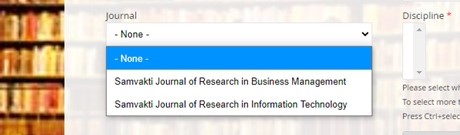
Select Journal where you wish to partner us as a Author. When a Journal is selected, all available discipline are made available. Select all disciplines as per your specialization Fill in other required details and submit the request. Create the profile as detailed as much as much possible. Once request is submitted it goes to Editorial Office for review and approval,
|
|
To partner as a Reviewer, you will need to create an account.
Select Journal where you wish to partner us as a reviewer. When a Journal is selected, all available discipline are made available. Select all disciplines as per your specialization Fill in other required details and submit the request. Create the profile as detailed as much as much possible. Once request is submitted it goes to Editorial Office for review and approval,
|
|
Manuscripts are published based on the format as prescribed which can be downloaded by clicking here. The Submitted manuscript should be in editable formats like .odt, .doc, .docx.
The File can also be downloaded by clicking on file name below. |
|
We follow the double-blind review process to approve and publish the research article. If you are new to Samvakti Journals, Create your Author’s Profile, the process of creating the author’s profile can be found here Process to create Author’s Profile
Once you have created your profile you can publish journals, research articles white papers, etc with us.
At all five stages, authors can check the status of their manuscript. Status can be checked at My Submitted Journals. apart from keeping the author informed, regular feedback is taken from them. This is to ensure the Work is done as per the expectation of the Author.
By submitting a Manuscript Author agrees to the disclaimer and license Agreement mentioned on the Manuscript Submission form. Refund policy and Publication Charges in case of Manuscript is rejected by Samvakti Journals can be referred here For details on the retraction / withdrawal / transparency policy can be found in the Author's Ethic Code. In case of any query or logging the complaint, Please get in touch with us at the Contact Us Page 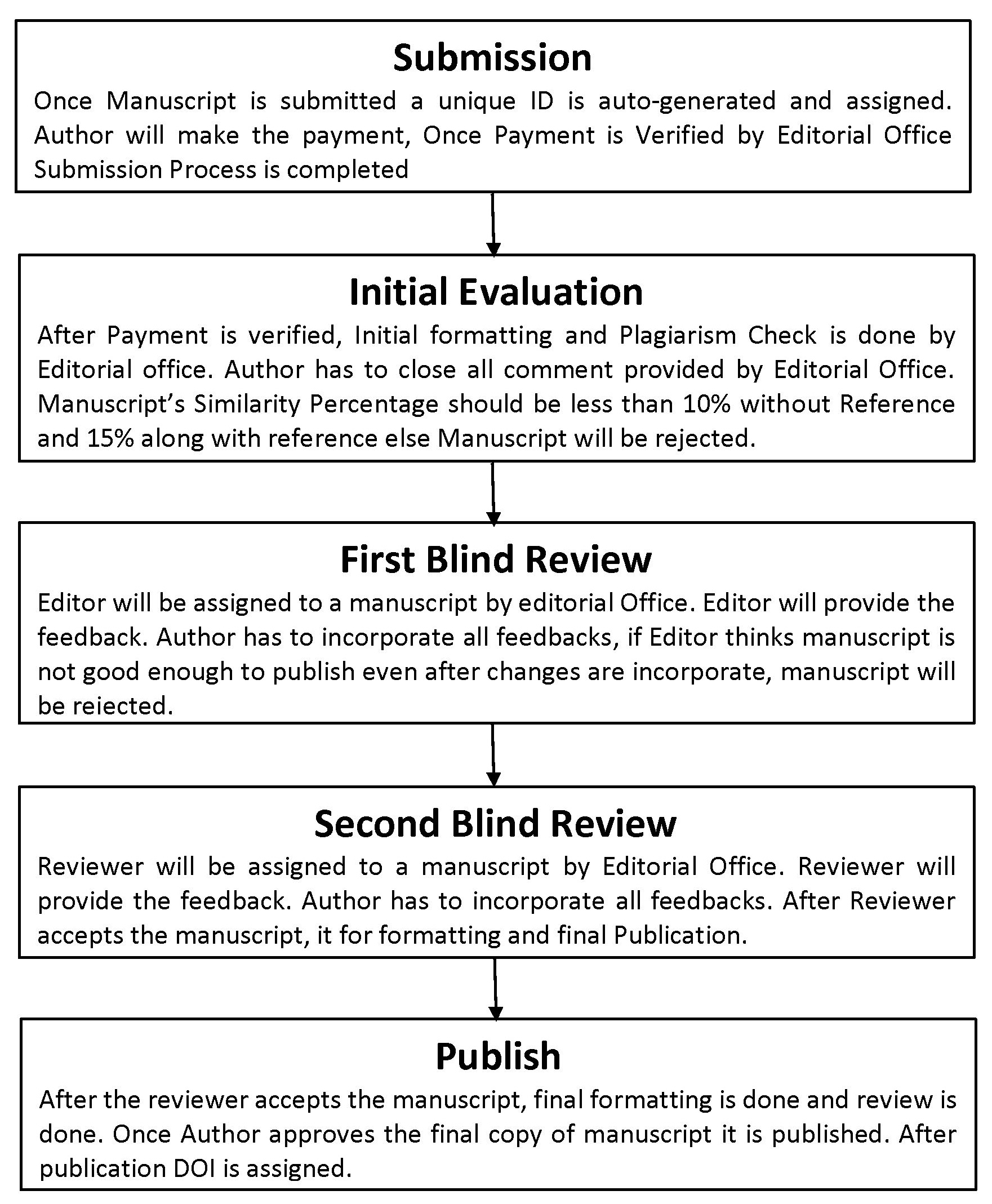 |
|
Plagiarism & Similarity Check Policy
Samvakti Journals is committed to maintaining the highest standards of originality and academic integrity. All manuscripts submitted to any journal published by Samvakti Pvt. Ltd. undergo plagiarism and similarity screening before peer review and again whenever the manuscript is revised by the author(s). This policy applies to all journals under Samvakti Journals. 1. Definition of Plagiarism
Plagiarism includes, but is not limited to:
2. Similarity Screening Process
2.1 Initial Screening Every submitted manuscript is checked using plagiarism-detection software.
2.2 Similarity Threshold Requirement
To proceed to peer review, the Similarity Index must be less than 10%. 2.3 Rechecking After Revision
Whenever authors submit revised or updated versions of a manuscript, the revised document is rechecked to ensure:
3. Editorial Actions Based on Similarity Results
3.1 Similarity Below 10% The manuscript proceeds to peer review. Minor citation or formatting corrections may be requested. 3.2 Similarity Between 10–25%
The manuscript is returned to the authors for rewriting. A revised version must undergo an additional similarity check. 3.3 Similarity Above 25%
The manuscript may be rejected due to unacceptable similarity. In cases of intentional plagiarism, authors may be restricted from future submissions. If detected after publication, the issue will be handled in accordance with the Retraction, Correction & Withdrawal Policy. 4. Self-Plagiarism and Duplicate Submission
Submitting the same manuscript to multiple journals simultaneously or submitting a manuscript that substantially overlaps with previously published work is not permitted. Authors must disclose prior versions such as conference papers, theses, or preprints. 5. Use of AI Tools
Authors must disclose the use of AI tools for writing, editing, data analysis, or image generation. Authors remain fully responsible for the originality and accuracy of all submitted content. 6. Author Responsibilities
Authors must:
7. Editorial Responsibilities
Editors and reviewers evaluate similarity reports contextually and follow ethical guidelines during investigation and decision-making. All similarity-related decisions are made by the Editor-in-Chief. 8. SPC Refund Policy for Similarity-Related Decisions
Refunds connected to article processing charges follow the official Samvakti Publication Charges (SPC) Refund Policy published here: Refund eligibility is determined strictly according to the refund table provided on the SPC page, depending on whether the manuscript is:
No additional refunds are issued beyond the stated SPC refund policy. 9. Contact Information
For questions related to similarity screening or plagiarism investigations, authors may contact: Samvakti Journals Editorial Office Website: https://www.samvaktijournals.com
|
|
A Journals is an open access journals which doesn't have any access restrictions. These Journals publish research which are available to everyone to read for free. However author provide the publications charges to publish such research. Readers have right to reuse the article if due credit of work is given to author. Complete details about open access Journals with Samvakti Journals can be found by clicking here |